
SERVICES / STANDING SEAM ROOFING
Standing Seam Metal Roof Panels in NJ
Snap-lock and mechanical seam standing seam panels, cut and formed to your profile, gauge, and color in our East Orange shop. We fabricate the metal to your spec.
STANDING SEAM
Panels cut to your roof, not a catalog
U Design Fabricators forms the standing seam metal roof panels that NJ roofing contractors, general contractors, and architects rely on across the North Jersey tri-state. We form the panels to your spec. Snap-lock suits most slopes, mechanical seam suits low-slope and architectural roofs, in steel or aluminum and the 70% PVDF color your drawings call for.
The shop has been forming standing seam panels since 2014, with more than two decades on the brake and roll formers behind the work. That bench time shows up in the metal: square cuts, clean hems, and seam legs that lock the way the profile is supposed to.
Fabrication leads the work, and the metal ships ready to set. The roof stays your job. The panel is ours.
Standing seam roofing is most of what we do, and we treat it that way. Every order is cut to your roof rather than pulled from a catalog of stock lengths, so panels land on the building at the run lengths you need with the seam legs already formed for the profile you picked.
PROFILES AND SPECS
Snap-lock and mechanical seam panels
We fabricate standing seam panels in residential, commercial, and architectural profiles, rolled on our New Tech Machinery SSQ II MultiPro. U Design is a certified installer of Englert and Sheffield systems, certified since 2019, so the panels are formed in a shop that has run these systems on real roofs. The manufacturer's finish warranty comes with the coil, and U Design warranties its own fabrication.
Snap-lock profiles lock together by hand and suit most steeper slopes. Mechanical seam profiles are crimped closed after the panel is set, which tightens performance on low-slope and architectural roofs. Send the slope, the exposure, and the look you are after, and we help match the profile to the project.
Standing seam panels run in 22 to 28 gauge steel (painted, Galvalume, or coated galvanized), .027 to .040 aluminum, and 16 to 20 ounce copper, finished in the 70% PVDF color your drawings call for. A floating clip system lets the metal move with temperature so long runs stay flat across the seasons.
Across the profile families we roll, you can pick a striated pan that hides minor waviness or a smooth flat pan for a sharper, more modern face. Pan choice, gauge, and clip spacing all play into how flat a finished run reads, and we walk through those calls with you before any coil gets cut. For runs too long to truck without a splice, we can roll standing seam panels on site at the building.
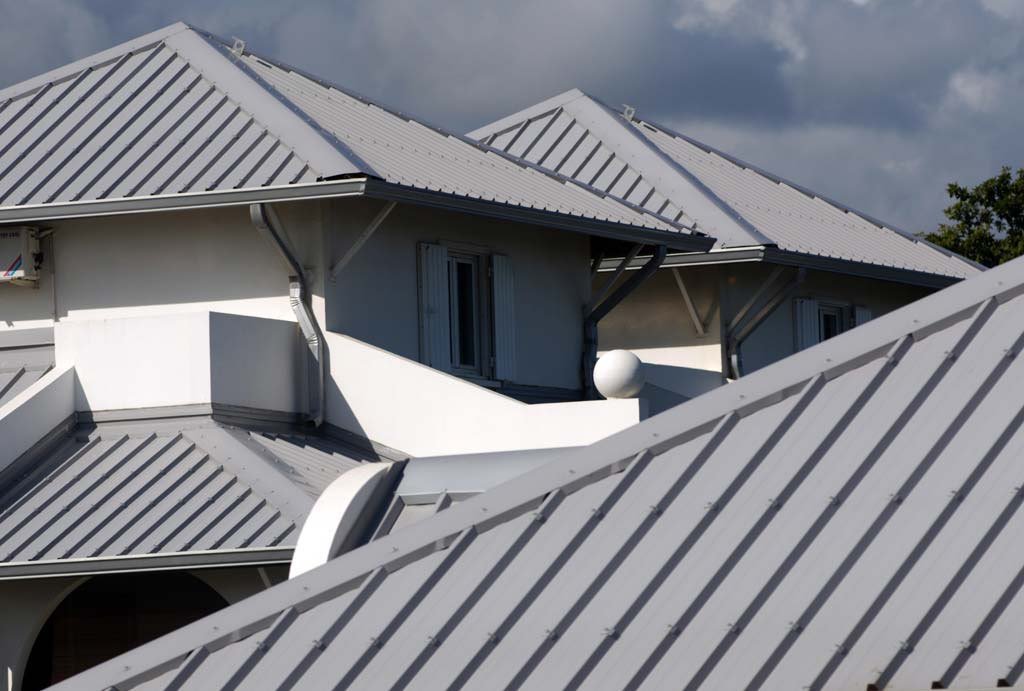
Profiles we roll include
| Profile | Type | Panel coverage |
|---|---|---|
| SS100 | 1 in mechanical seam | 12 to 24 in |
| SS150 | 1.5 in mechanical seam | 12 to 24 in |
| SSQ200 | 2 in mechanical seam | 12 to 24 in |
| SS450 | 1.5 in snap-lock | 12 to 24 in |
Specs at a glance
- Substrates: 22 to 28 gauge steel (painted, Galvalume, coated galvanized); .027 to .040 aluminum; 16 to 20 oz copper
- Panel widths: 12 to 24 inches between seams, varies by profile
- Minimum slope: 3:12 for snap-lock profiles, lower for mechanical seam
- Coatings: 70% PVDF (Kynar 500 and Hylar 5000) in 50+ standard architectural colors
- Floating clip system accommodates thermal movement
SUPPLIER LINES
Standing seam metal roof panels: the NJ lines we run
We form our standing seam panels from Englert, Sheffield, and Drexmet material, so each panel carries the manufacturer's finish warranty that comes with the coil.


STANDING SEAM QUESTIONS
Standing seam panels in NJ, answered
Snap-lock or mechanical seam for my roof?
Snap-lock profiles lock together by hand and suit most slopes from 3:12 up. Mechanical seam is crimped closed after the panel is set and is the call for low-slope and exposed architectural roofs. Send the slope and the exposure and we match the standing seam panel to the project.
Which gauges and metals do you roll?
Standing seam panels run in 22, 24, and 26 gauge painted Galvalume steel, plus .032 and .040 aluminum for coastal and corrosion-sensitive jobs, all finished in 70% PVDF in 50-plus standard colors.
Can you match an existing standing seam roof?
Yes. Send the profile and the color name, or a metal sample, and we match the panel and the matching edge metal so a repair or a new phase blends with what is already on the building.
How are long panel runs kept flat?
A floating clip system lets the metal expand and contract with temperature, so long standing seam panel runs stay flat across the seasons instead of buckling or oil-canning at the seams.
Do you fabricate the trim to match the roof?
Yes. Coping, fascia, ridge, valley, and rake trim are fabricated in the same finish as the panels, so the whole roof reads as one system. Order the edge package with the standing seam and it arrives color-matched.
Do you install the roof too?
Fabrication is the focus. We cut and form the panel and the trim to your spec, and most orders are set by your own crew or roofing contractor.
How do I choose among the profile families?
It comes down to slope, the panel width you want to see, and the look. Wider profiles cover more roof with fewer seams. Narrower architectural profiles give a tighter seam pattern. Snap-lock families install faster, while a true mechanical seam family is the pick when slope is low. Send the slope and a photo of the look you want and we point you to the right family.
What is the difference between a striated and a smooth pan?
A striated pan has small ribs rolled into the flat of the panel. Those ribs stiffen the metal and hide minor oil-canning, which makes them forgiving on long runs and lighter gauges. A smooth or flat pan has a clean face and a more modern look, but it shows waviness more, so it usually wants a heavier gauge and tighter clip spacing.
Steel, aluminum, copper, or zinc, which should I spec?
Painted Galvalume steel is the workhorse for most roofs and the best value. Aluminum in .032 or .040 is the call near salt air or where corrosion is a concern. Copper, zinc, and stainless are for high-end architectural work and patina jobs. Tell us the environment and the budget and we will lay out the trade-offs.
Which gauge should I order, 22, 24, or 26?
26 gauge is the lightest and the most economical, fine for shorter residential runs. 24 gauge is the common architectural standard and handles longer runs and flat pans better. 22 gauge is the heaviest, for wide commercial panels and the most demanding spans. Heavier metal holds a flatter pan but costs more per square.
How does the clip system handle thermal movement?
Metal grows and shrinks as the roof heats and cools, and a long panel can move a noticeable amount over a day. The fastening systems we use let the clip slide so the panel floats instead of pinning it in place. That is what keeps a long standing seam panel from buckling, tearing at the fasteners, or oil-canning at the legs.
Whose warranty covers the finished panels?
The manufacturer's. We fabricate Englert, Sheffield, and Drexmet material to your spec, so each panel carries that maker's finish warranty, which comes with the coil. U Design warranties its own fabrication.
Can I get a custom color that is not in the 50-plus standard?
Yes. The Sheffield line gives you more than 50 standard architectural colors in 70% PVDF, the Kynar 500 and Hylar 5000 coatings. If the project calls for a shade outside that deck, we arrange custom color matching so the panel hits the spec on the drawings.
Can you roll panel on site for long runs?
Yes. When a run is too long to truck without a splice, on-site roll-forming lets us form full-length panel right at the building. For everything else, panels are formed in the East Orange shop and go out by delivery or shop pickup.
Do you deliver, or do I pick up?
Both. We deliver within about 150 miles of East Orange, which covers Essex, Hudson, Union, and Bergen counties and well beyond. If you would rather grab the order yourself, pickup at the shop at 10-12 Hedden Place is open. We work in English and Portuguese, so call (201) 306-5845 either way.
HOW AN ORDER RUNS
How a standing seam panel order runs
- 1
Send the spec
Email the drawings, a panel schedule, or just the slope, profile, gauge, color, and run lengths for your standing seam panels. A photo of an existing roof or a metal sample works too when you are matching a building. The more you send, the tighter the quote comes back.
- 2
Confirm profile, gauge, and color
We confirm the profile family, the substrate and gauge, the pan style, and the exact PVDF color before anything is cut. If a detail on the drawings does not fit the metal, we flag it now, not after the coil is run.
- 3
We fabricate the panel
The coil is run through the roll former to your lengths, the seam legs are formed for snap-lock or mechanical seam, and any matching trim is brake-formed in the same finish. This is the heart of forming standing seam panels: the metal is cut and rolled to your numbers. Long runs can be formed on site when a panel is too long to truck.
- 4
Pickup or delivery
Grab the order at the East Orange shop, or we deliver across North Jersey within about 150 miles. Panels and trim arrive bundled and color-matched so your crew can set them straight off the truck.
PROFILE FAMILIES
Picking the right standing seam panel profile
Snap-lock for speed
Snap-lock legs press together by hand, so a crew sets them faster with no field seaming. They suit most slopes from 3:12 and up and cover the bulk of residential and light commercial standing seam roofing work. When the schedule is tight and the slope allows it, snap-lock is usually the move.
Mechanical seam for low slope
A mechanical seam is folded closed with a seaming tool after the panel is set, which clamps the legs tight and earns its keep on low-slope and exposed architectural roofs. It takes more labor in the field, but on a shallow roof or a demanding elevation, that locked seam is what you want.
Wide pans for coverage
Wider profile families put more roof under each panel and fewer seams across a plane. That can speed a big commercial roof and give a cleaner look on large surfaces. The trade-off is that wide flat pans show oil-canning more, so they often want a heavier gauge or a striation.
Narrow architectural pans
Tighter panel widths give a finer seam rhythm that architects often want on a feature elevation or a residential front. The seams read as a deliberate line across the roof. Narrower pans also stay flatter on lighter gauges, which helps on smooth flat-pan jobs.
Striated pans that hide waviness
Ribs rolled into the pan stiffen the metal and break up reflections, so minor oil-canning disappears. On long runs, lighter gauges, or bright colors that show every ripple, a striated pan is the safe call and forgives a lot.
Smooth pans for a modern face
A smooth flat pan gives the crisp, minimal look a lot of modern designs are after. It shows waviness more than a striated pan, so we pair it with a heavier gauge and tighter clips to hold it flat. When the drawings want clean, this is the pan, and we spec the rest to back it up.
METAL AND FINISH
Substrate, gauge, and finish in standing seam panels
Pick the substrate for the site
Painted Galvalume steel covers most roofs and gives the best value per square. Aluminum in .032 and .040 resists corrosion near salt air. Copper, zinc, and stainless are for high-end architectural and patina work. We stock and form all of them for standing seam panels, so the choice is driven by the building, not by what is on the rack.
Match the gauge to the run
26 gauge is light and economical for shorter residential runs. 24 gauge is the architectural standard and the right pick for longer panels and flat pans. 22 gauge is the heavy option for wide commercial work and the longest spans. Heavier metal holds a flatter pan but adds cost and weight, so we size it to the job.
Finish that holds its color
Panels are coated in 70% PVDF, the Kynar 500 and Hylar 5000 resins that hold color and gloss for decades against UV. Through our Sheffield Metals supply line you get more than 50 standard architectural colors, and we arrange custom color matching when the spec calls for a shade outside that deck.
Send your spec, get a fabrication quote
Email the drawings or call the shop. Pricing comes back itemized, with a lead time you can plan around, from the people who will run the metal.
BEFORE YOU QUOTE
What to send to quote standing seam metal roof panels in NJ
A tight quote starts with a tight spec. If you have architectural drawings or a panel schedule for your standing seam panels, send them and we will work from those. If you are a contractor working off a measure, the slope, the profile family, the gauge, the color, and the run lengths are enough to get a real number back.
When you are matching an existing roof, a photo of the seam and a small metal sample tell us more than a written description ever will.
We confirm every detail before the coil is cut, because the cheapest fix for a wrong gauge or a mismatched color is the one that happens before fabrication. If something on the drawings will not behave in metal, we say so up front.
That habit comes from more than two decades on the brake and on the roof, and it saves contractors callbacks they would otherwise eat. Good standing seam work is half the metal and half the questions asked before the metal is cut.
Send these and we can quote
- Slope of each roof plane, since slope drives snap-lock versus mechanical seam
- Profile family or the look you are after, with a photo if you have one
- Substrate and gauge: Galvalume steel, aluminum, copper, zinc, or stainless
- PVDF color name, a Sheffield color, or a sample to match
- Run lengths and total squares, plus any trim you need formed to match
- Pickup at the East Orange shop or delivery within about 150 miles
Have a standing seam panel project to spec?
Send the profile, gauge, color, and run lengths, or just the drawings, and we will quote the panels. Pickup in East Orange or delivery across North Jersey.